The 'Bariatric Gelatin Trick' That Women Over 35+ are Using When Their Metabolism Slows Down—And Wich is Gaining Attention as a Natural Alternative to GLP-1.
This simple 3-minute method using gelatin has been gaining attention as a natural alternative to GLP-1 for women experiencing metabolic changes after age 40.
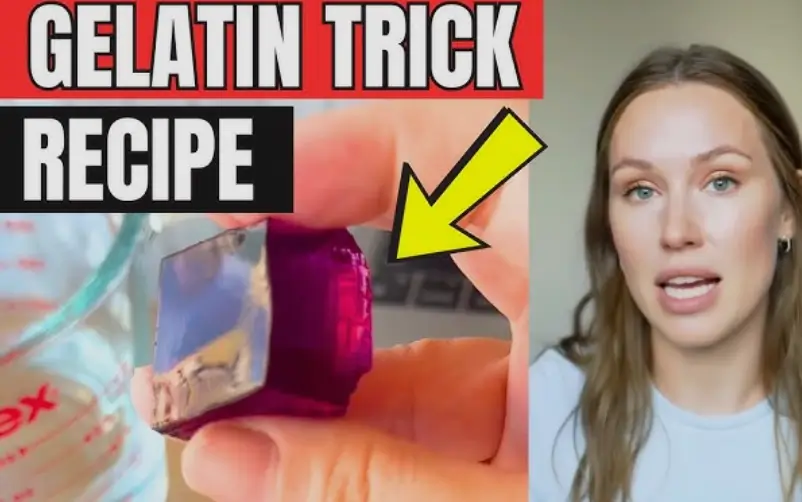
Why Your Body After 35 Responds Differently — And What Science Is Beginning to Explain
If you've ever followed a program perfectly — eating well, staying consistent — and still watched the scale refuse to move, you're not imagining things. Research increasingly points to biological shifts that begin in your mid-40s and genuinely change how the body handles food, energy, and fat storage. Recognizing these shifts is the first step. Ask yourself if any of the following sound familiar:
These patterns are recognized in current research as having a strong hormonal basis — particularly during the perimenopausal transition. The free presentation explores what's behind them and what nutritional science currently understands about addressing them naturally.
What's Actually Happening in Your Body — And Where Gelatin Fits In
Conventional wellness advice tends to be built around younger bodies. Eat less, move more, stay consistent. But for many women over 40, that equation quietly stops working — not because of a lack of effort, but because the underlying hormonal environment has shifted in ways that standard guidance rarely accounts for.
During perimenopause and beyond, the body's internal signaling around hunger, fullness, and energy storage changes measurably. Hormones that once helped regulate appetite and support a healthy metabolic rate begin to behave differently. This isn't a motivation problem — it's a biology problem. And that distinction matters enormously for how you approach it.
The Role Gelatin May Play
Plain, unflavored gelatin is a concentrated source of two amino acids — glycine and proline — that researchers are studying for their potential role in supporting the body's own appetite-regulating signals. The connection to GLP-1 and GIP — hormones involved in hunger and glucose metabolism — is an active area of nutritional science.
What the free presentation addresses is this: not all gelatin preparations are equal. The timing, the form of gelatin used, and what it's paired with all influence whether the preparation may have any meaningful effect. A standard flavored gelatin product from the grocery shelf works very differently from the specific formulation described in the video.
The presentation walks through each component, the reasoning behind it, and what the available research currently does — and doesn't — support.
This isn't a replacement for medical care, and the presentation doesn't position itself as one. What it offers is a clearer understanding of the hormonal picture and a specific, low-cost nutritional habit that some women are choosing to explore alongside their existing routines.
What Women Are Saying After Watching the Presentation
What stayed with me was how it reframed the whole conversation. It wasn't about eating less — it was about understanding why my body sends the signals it does. That shift alone felt valuable.
I've sat through a lot of wellness content. This one was different — it didn't oversell anything. It laid out the reasoning clearly and let me decide whether it made sense for me.
I sent it to two friends going through the same thing. The section about hunger hormones explained something I'd been noticing in my own body for years but couldn't quite articulate.
I appreciated that it was honest about what's proven and what's still being studied. That kind of transparency is rare in this space, and it made me take the information more seriously.